





















Resident Evil Review: Zach Cregger Turns the Game Franchise Into a Fast, Unpredictable Horror Ride

Zach Cregger takes a very different route with Resident Evil. Instead of attempting to recreate the storylines, characters, and mythology that longtime players already know, the director uses the franchise as a foundation for an original survival-horror story built around tension, exploration, bizarre creatures, and a constant sense that the next room could contain something much worse than the last one.
The result has surprisingly little in common with the previous Resident Evil movies on a narrative level. There is no Leon Kennedy, no Albert Wesker, and no attempt to directly retell one of the classic games. The Umbrella Corporation receives only a passing connection to the wider franchise, while much of the familiar mythology is left behind.
That could sound like a strange approach for a video game adaptation. Yet Cregger understands something important about Resident Evil: recreating the plot is not necessarily the same as recreating the experience of playing the games.
A New Story in Raccoon City
The film follows Bryan, a young delivery driver played by Austin Abrams. He is the sort of ordinary person who would rather avoid major responsibilities than confront them directly, and his decision to make an overnight delivery through a snow-covered stretch of Raccoon City quickly becomes a much bigger problem than he could have anticipated.
Bryan is already trying to avoid dealing with an important personal issue involving his girlfriend Michelle when an unexpected accident puts him on an entirely different path. What follows turns a routine journey into a desperate attempt to stay alive.
Cregger keeps the story deliberately narrow. Bryan is not introduced as a trained soldier or an experienced monster hunter. He is simply someone caught in an increasingly impossible situation, which makes his attempts to understand what is happening feel considerably more immediate.
Resident Evil Feels Like a Game Without Recreating One
The most successful element of the movie is the way it translates familiar video game mechanics into a cinematic experience.
Bryan constantly has to figure out where he can go next, what he can use, and how to overcome seemingly simple obstacles while something dangerous is closing in on him. Doors need to be opened, routes have to be discovered, weapons have to be handled under pressure, and seemingly insignificant objects can suddenly become essential.
That structure creates the same kind of tension associated with the games. The fear doesn’t always come from seeing a monster. Sometimes it comes from knowing that a locked door is standing between the protagonist and safety, without knowing what might be waiting on the other side.
Cregger also pays close attention to geography. The audience generally understands where Bryan has been, where he needs to go, and what stands between those two locations. This makes the journey itself part of the suspense rather than simply using locations as backgrounds for individual action sequences.
The Horror Works Best When It Stays Practical
© Sony Pictures Releasing
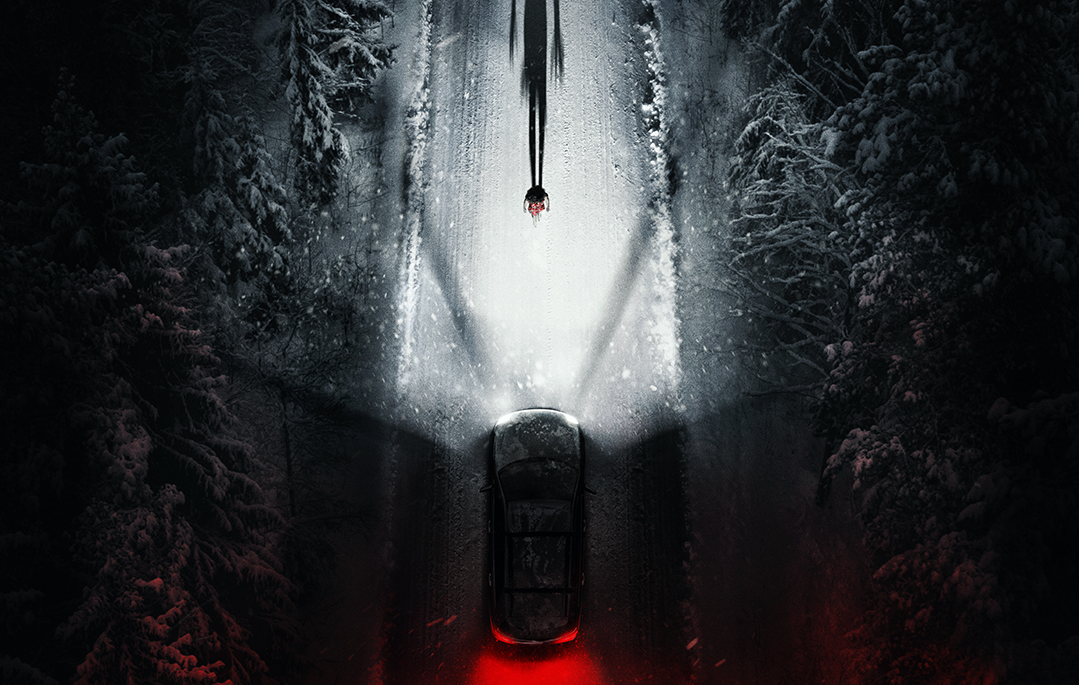
Resident Evil wastes little time before introducing its first major horror sequence. The opening stretch is particularly effective because Cregger allows the situation to develop through physical spaces and practical problems instead of relying exclusively on digital spectacle.
A car accident becomes increasingly disturbing. Handling a weapon is difficult when panic takes over. An abandoned property has to be examined for clues. Even an aggressive animal can become a serious threat when the protagonist has limited options.
The movie repeatedly turns ordinary objects and situations into survival challenges. That approach gives the action a tactile quality and helps the stranger creatures feel more convincing when they finally appear.
There is also plenty of dark humor. Cregger is willing to let grotesque situations become funny without completely removing their danger. The combination of ridiculous imagery, practical horror, and uncomfortable comedy is particularly recognizable from his previous films, including Barbarian and Weapons.
Austin Abrams Keeps the Story Grounded
Austin Abrams is well suited to the role of Bryan because he doesn’t play the character as an action hero from the beginning. Bryan is confused, frightened, and frequently overwhelmed by events that make little sense to him.
That ordinary quality gives the increasingly outrageous events something to push against. The more extreme the creatures and situations become, the more useful it is to have a protagonist who reacts as an actual person might rather than immediately accepting the rules of the nightmare around him.
The movie also surrounds Bryan with several recognizable performers, although their appearances are relatively limited. Their characters introduce additional dimensions to the story but also reveal one of the film’s weaknesses: once the movie expands beyond Bryan’s immediate struggle, some of the momentum begins to disappear.
Where the Movie Loses Momentum
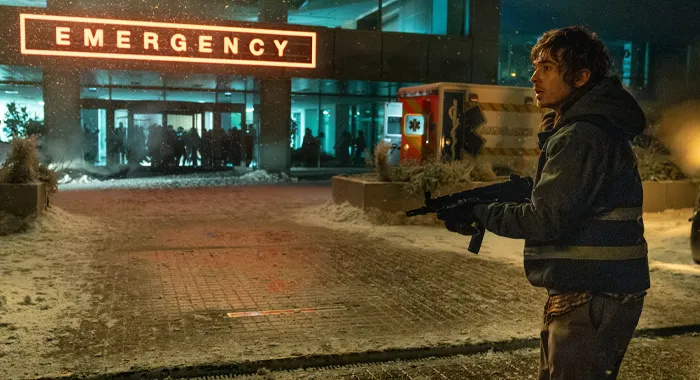
Photo by Dušan Martinček / ©Sony Pictures Releasing
Resident Evil is at its strongest when it remains focused on Bryan’s immediate survival. The opening portion moves with considerable urgency, creating one problem after another without giving the audience much time to settle.
Once the story slows down and introduces more characters, however, some of that intensity fades. The broader world of Raccoon City never receives quite enough development to compensate for the decision to largely ignore the established Resident Evil mythology.
That choice works when the movie is functioning as a self-contained survival adventure. It becomes more noticeable when the story attempts to expand its scope. Without a deeper connection to the franchise’s mythology, some of the larger developments can feel more like elaborate jokes than pieces of a fully developed world.
The film also has an intentionally exaggerated tone. For viewers looking for the melodramatic science-fiction horror associated with the games, Cregger’s approach may feel unusually loose. The creatures are often grotesque and absurd, while the story is more interested in momentum and dark comedy than in constructing an elaborate mythology.
A Different Kind of Video Game Adaptation
Resident Evil ultimately works because Cregger isn’t trying to reproduce the franchise piece by piece. Instead, he takes recognizable elements of survival horror — limited resources, environmental puzzles, exploration, sudden attacks, grotesque monsters, and uncertainty about what lies ahead — and builds a new story around them.
That decision also explains the movie’s limitations. The lack of familiar characters and deeper mythology gives Cregger considerable freedom, but it leaves the wider world feeling less substantial than it might have been.
Still, the film has a clear identity. It moves quickly, embraces its stranger ideas, and understands that a Resident Evil movie can be frightening because of the process of getting somewhere, not only because of the monster waiting at the destination.
For much of its runtime, Cregger’s Resident Evil feels less like a conventional franchise sequel and more like an original survival-horror game that happens to carry a very familiar name. That makes it an unusual entry in the series, but also one that understands the appeal of the source material in a way that goes beyond simply reproducing its characters and plot.