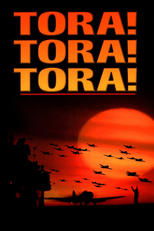
This is told a little in the style of “The Longest Day” (1962) as it shows us both sides of the preparations for the attack on Pearl Harbor in 1941. With the US having moved it’s Pacific fleet from the safety of San Diego to an altogether more vulnerable location on Hawai’i, Admiral Kimmel (Martin Balsam) arrives to take command amidst considerable concern from his advisors - across the services, that the Japanese could attack with relative ease. Meantime, across the ocean the last vestiges of resistance to Japan’s alliance with the Nazis are being eroded and with Admiral Yamamoto (Sô Yamamura) now in charge of the imperial Navy, the momentum to attack becomes unstoppable. What might be a game-changer for the attackers is the ability to drop torpedoes from aircraft. The harbour was hitherto deemed to be too shallow for those to be effective, but the skilful airman Genda (Tatsuya Mihashi)…
read the rest →
I remember viewing this film as a kid shortly after it came out in Sweden. At that time I was not impressed. I was expecting an action filled war movie and what I got was a boring movie where the good guys got beaten up at the end. I do not think I even new anything about the real events in Pearl Harbor at the time.
Naturally I view this movie in a somewhat different light and now and when re-watching it yesterday evening I enjoyed it quite a lot. I cannot help but wondering at the historical accuracy though. If someone would have told me that this was nothing but a Hollywood script, and a predictable at that, I would probably not have doubted it.
Did all these blunders really take place? That the Japanese where not playing with all their cards on the table is clear but there where so many screw-ups all over the place. Sightings not being reported, communications a mess everywhere,…
read the rest →
First off, this is a very good historical fictionalization of an epic event. Many parts are very accurate whereas others are more or less. This is after all a Hollywood movie, NOT a documentary such as "The World At War", so we can't be too critical about perfect accuracy.
Originally it was supposed to be directed by two directors, 1 for the American story line, and Akira Kurosawa, for the Japanese story. There were rumored difficulties between Mr. Kurosawa and the American studio bosses so Mr. Kurosawa left the production despite having an uncredited role in scripting the Japanese part of the screenplay.
I have read recently that the version that was being shown, of the historical account in the movie, was different than the conventional history's perspective. However, I would say that is only in demonstrating, theatrically, how Admiral Kimmel and General Short, who were scapegoat…
read the rest →